Patients considering eyelid surgery at DMR Aesthetics in Chicago—especially those who are ideal candidates for blepharoplasty—often have questions about scarring. It’s completely understandable. If you’re moving forward with eyelid surgery, your goal is smoother skin and improved eye contours—not visible scars that draw attention.
At DMR Aesthetics, Dr. Dahlia Rice uses advanced, precise techniques to place incisions in discreet, natural areas. Upper blepharoplasty incisions are typically hidden within the natural crease of the upper eyelid, while lower blepharoplasty incisions are carefully placed just beneath the lower lash line or inside the lower lid, depending on the approach.
With proper technique and healing, blepharoplasty scars are usually minimal and fade well over time. Below, we’ll take a closer look at incision placement and what you can expect as your results heal and mature.
Where Are Blepharoplasty Scars Located?
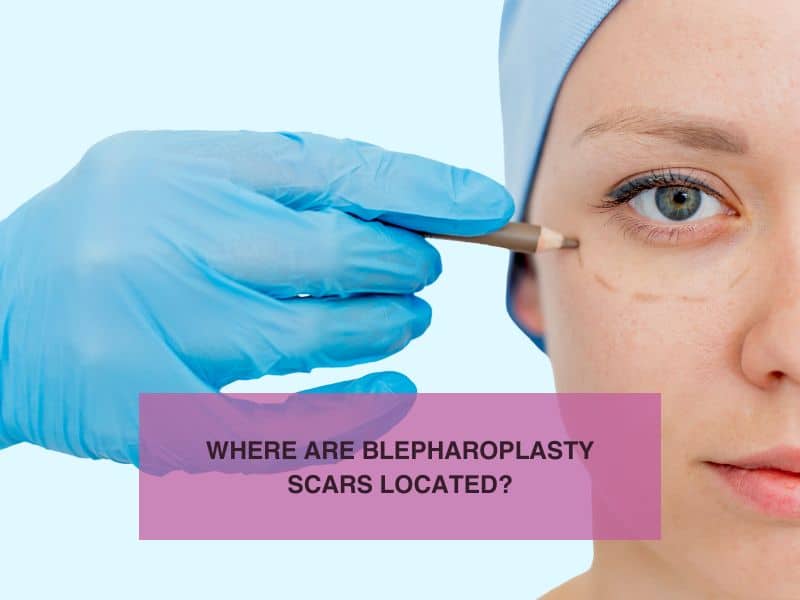
Blepharoplasty, or eyelid surgery, is a cosmetic procedure designed to improve the appearance of the eyelids by removing excess eyelid skin, fat, and/or muscle. One of the key concerns for patients considering this surgery is scarring. Naturally, patients want to minimize scarring whether they’re undergoing lower eyelid surgery, upper eyelid surgery, double eyelid surgery, or some variation of these.
The good news is, the natural folds of the eyelid (natural eyelid crease) can help to disguise incisions made during cosmetic eyelid surgery. That way, the patient ends up with minimal scarring in the first place, and any scars that are present after the healing process are barely noticeable.
Since we all have delicate eyelid skin, understanding where scars are located and how they heal is crucial for setting realistic expectations. Below, we’ll discuss both upper eyelid scars and lower eyelid scars after the recovery process for blepharoplasty cosmetic surgery.
Eyelid Surgery Before and after Chicago
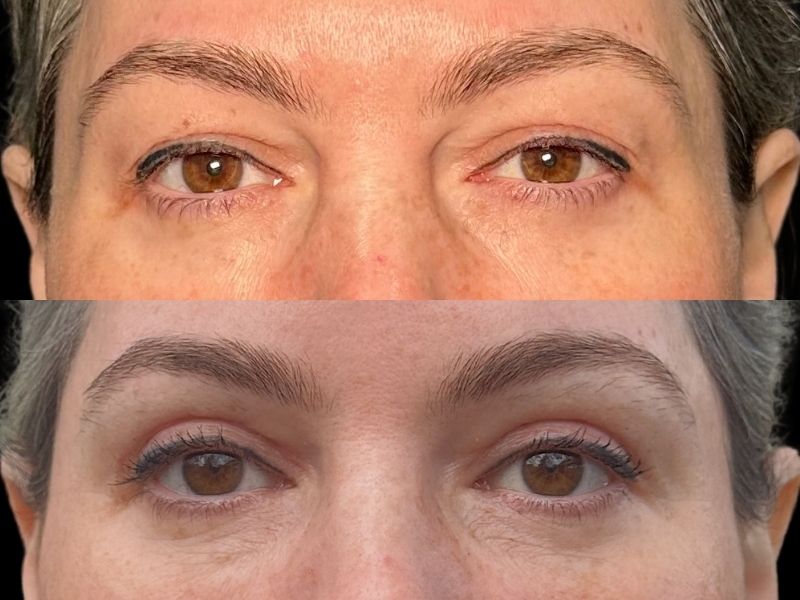
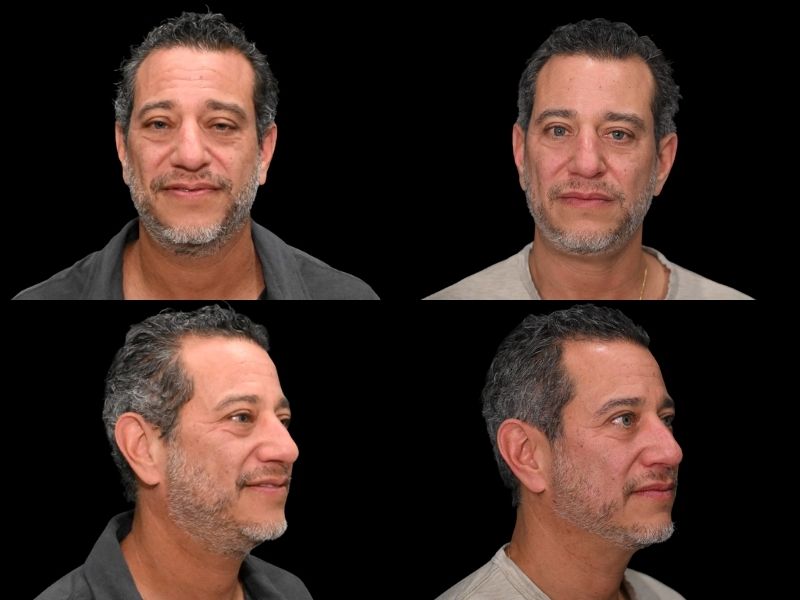
Bad Blepharoplasty Scars: Understanding Eyelid Surgery Healing
While most eyelid procedures heal well, scarring can vary based on technique, skin type, and the overall healing process. During eyelid surgery, incisions made for upper eyelid surgery and lower eyelid surgery are carefully placed to remove excess fat and improve contour, but some patients may still worry about eyelid surgery scars.
In certain cases, scar tissue can thicken during the healing process, leading to raised scars such as hypertrophic or keloid scars. True keloid scars are uncommon, though they may occur more frequently in patients with darker skin tones. Working with a specialist in facial plastic surgery helps reduce the risk of visible eyelid scars and concerns related to bad blepharoplasty scars after eyelid surgery.
In rare situations, patients may experience a botched blepharoplasty, where poor incision placement, excessive tissue removal, or improper healing can lead to visible scarring or uneven results. These cases may increase the risk of noticeable scars and prolonged healing, but corrective treatments or revision surgery can often improve both appearance and comfort when addressed by an experienced eyelid specialist.
Eyelid Surgery Scars
Upper Eyelid Scars
For upper eyelid blepharoplasty, the surgeon makes incisions along the natural crease of the upper eyelid. This placement helps to conceal the scar within the fold, making it nearly invisible once healed.
The surgeon removes or repositions excess skin and fat through this incision. Because the incision follows the natural contour of the eyelid, scars from upper blepharoplasty tend to be well-hidden, even when your eyes are open. With proper post-operative care, these scars typically fade and blend in with the surrounding skin within just a few months.
Lower Eyelid Scars
In lower eyelid blepharoplasty, the incision is made just below the lower lash line or sometimes, on the inside of the lower lash line. This placement ensures that the scar is discreet and easily concealed, often blending into the natural creases under the eyes.
Through this incision, the surgeon removes or repositions excess fat and skin to address under-eye bags and sagging. Because of the careful positioning of the incision, the resulting scar is usually difficult to notice after healing.
Scar Healing and Care
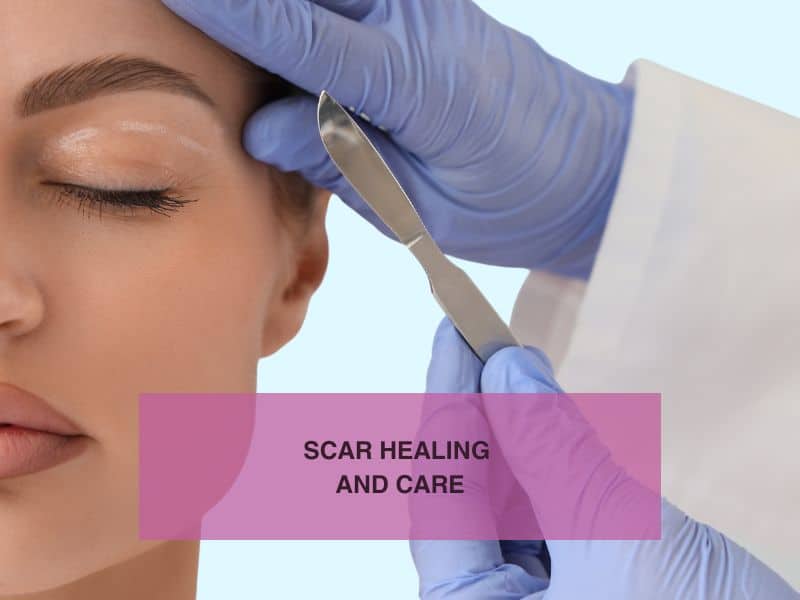
Although blepharoplasty scars are typically minimal and strategically placed to be as inconspicuous as possible, they still require proper care to heal optimally. Post-surgery, your surgeon will provide specific instructions for caring for the incision sites.
Here are some tips they may advise.
Keeping Incision Sites Clean
Proper hygiene is key to reducing the risk of infection and ensuring optimal healing of your scars. Follow your surgeon’s instructions on how to clean the incision sites, usually with mild soap and water. Be gentle when washing the area to avoid irritating the healing tissue, and always avoid rubbing your incisions.
Avoiding Sun Exposure
Sun exposure can cause scars to darken and become more noticeable. To prevent this, it’s important to avoid direct sunlight on the incision sites for several months after surgery. If you need to be outdoors, wear sunglasses and use a broad-spectrum sunscreen with a high SPF to protect the delicate skin around your eyes.
Using Scar Treatments
Your surgeon may recommend specific treatments to help minimize the appearance of scars, such as silicone gel sheets or scar creams. These treatments can aid in reducing scar thickness and improving its appearance over time.
Be sure to use only the products recommended by your surgeon and follow the application instructions closely.
FAQs: Bad Blepharoplasty Scars?
Blepharoplasty vs brow lift: What’s the difference?
Blepharoplasty surgery focuses on removing excess skin and fat from the eyelids to improve their appearance, while a brow lift elevates the eyebrows and smooths forehead wrinkles for a more youthful look. These procedures are sometimes combined.
What if I end up with lumpy scars after blepharoplasty?
Lumpy scars after blepharoplasty are usually caused by scar tissue. You’ll need to see your surgeon to discuss options for smoothing these bad blepharoplasty scars. This may include injections, massage, or a revision blepharoplasty surgery.
What surgery can help with hooded eyes?
Patients often undergo eyelid surgery for hooded eyes. This procedure can create a more distinct eyelid crease and remove excess skin that may be hanging over your eyes and causing you to look tired and groggy.
How does the cost difference between upper and lower blepharoplasty compare?
Upper eyelid surgery typically costs less than lower blepharoplasty due to the complexity differences between these procedures. Lower blepharoplasty often requires more intricate techniques to address puffiness, wrinkles, and under-eye bags, which can increase both surgical time and the surgeon’s fee.
Is eyelid surgery covered by insurance?
In most cases, insurance does not cover eyelid surgery when it is performed for cosmetic reasons. However, coverage may be available if eyelid surgery is medically necessary, such as when excess eyelid skin blocks vision. Your surgeon’s office can help determine eligibility and guide you through the required documentation.
Is a deep plane facelift more powerful than blepharoplasty?
A deep plane facelift in Chicago addresses deeper facial tissues in the cheeks and jawline, making it more comprehensive for midface and lower face sagging. Blepharoplasty is more targeted to the eyelids. Many patients combine blepharoplasty with a deep plane facelift for full facial rejuvenation.
Schedule a Consultation Appointment
Want to learn more about where blepharoplasty scars are located and how noticeable they might be? It’s best to talk directly to a blepharoplasty surgeon.
These are normal concerns before blepharoplasty. Fortunately, board-certified plastic surgeon Dr. Dahlia Rice can walk you through the process and explain how careful incision placement reduces visible scarring. Dr. Rice has helped many patients achieve youthful, refreshed eyes with minimal signs of surgery.
Contact our practice today to schedule a consultation with board-certified cosmetic surgeon Dr. Rice for eyelid surgery.