
One of the first questions we receive from breast lift surgery patients is, “Does insurance cover breast lift surgery?” Unfortunately, even the best breast lift surgeon cannot answer this question with a simple yes or no. The answer is more nuanced than that.
In the following article, we’ll dive into the details surrounding various types of breast lifts and insurance coverage, including different circumstances wherein your surgery may indeed be covered.
Does Insurance Cover a Breast Lift?
Most of the time, health insurance does not cover breast lift surgery. Since a breast lift is usually considered a cosmetic surgery, it is not seen as a medical necessity by insurance companies. Patients seeking a breast lift to restore breast shape due to the natural aging process or after pregnancy typically have to pay out of pocket.
Insurance coverage may be available in rare cases where the procedure is deemed medically necessary. If a patient experiences significant physical discomfort, such as back or neck pain due to sagging breast tissue, they may be able to make a case for insurance coverage. However, proving medical necessity can be difficult and often requires documentation from a primary care physician and a plastic surgeon’s office.
Extenuating Circumstances

There are a few situations where health insurance companies may consider covering a breast lift, especially if it is part of reconstructive surgery following a medical condition.
Does Health Insurance Cover Breast Lift Surgery After a Lumpectomy?
A breast lift may be covered if it is part of reconstruction surgery after a lumpectomy. When breast cancer treatment leads to noticeable asymmetry or deformity, some insurance companies will consider a breast lift medically necessary. In these cases, the goal is to restore breast shape rather than for cosmetic reasons.
Patients will need to work with their plastic surgeon and insurance provider to determine whether a breast lift is covered by insurance in their specific case. Documentation from the oncology team and plastic surgeon is typically required to justify medical necessity.
Does Insurance Cover Breast Lift After Weight Loss?
Some insurance providers may cover breast lift surgery after significant weight loss if excess skin causes physical symptoms. When large amounts of weight are lost, the skin may not retract fully, leading to sagging breasts that cause discomfort.
If a patient can demonstrate that removing excess skin will relieve physical symptoms like rashes, infections, or pain, their procedure might be considered medically necessary. However, each insurance company has different criteria, so it is important to check policy details and submit necessary documentation.
Does Insurance Cover Breast Lift Surgery Along with Breast Reduction?
Insurance may cover a breast lift if it is performed as part of a breast reduction. When comparing breast reduction vs breast lift, insurance companies are more likely to approve a breast reduction because it directly reduces breast size and alleviates physical discomfort. A lift is often performed at the same time to reshape and reposition the nipples after breast lift surgery.
If a patient qualifies for a medically necessary breast reduction, they should ask whether their insurance provider will cover breast lifts performed during the same procedure. Some policies allow it, while others may not.
When Is a Breast Lift Considered Medically Necessary for Insurance Coverage?
While most breast lifts are classified as cosmetic, there are situations where medical necessity plays a role in determining whether insurance may apply. In some cases, many insurance companies will review whether a medically necessary breast lift is justified based on documented symptoms rather than appearance alone.
Patients experiencing chronic pain, shoulder pain, or ongoing skin irritation caused by significant sagging may be evaluated differently, especially when the procedure is tied to reconstructive surgery or combined with breast reduction surgery.
Understanding your medical history and how symptoms affect daily life is critical when assessing whether a breast lift medically qualifies beyond cosmetic intent.
To explore if a breast lift covered scenario applies, patients must work closely with their surgeon and healthcare providers to submit thorough medical documentation, including physician notes, imaging, and supporting medical records.
Insurance reviewers look at whether the surgical procedure addresses functional issues and aligns with approved medical procedures, not elective enhancement.
Although insurance does not typically insurance cover a breast lift alone, certain breast lift procedures may qualify depending on severity, symptoms, and available breast lift options.
For costs not approved, patients may still offset expenses using flexible spending accounts, making breast surgery more accessible even when full coverage is not granted.
Breast Lift Surgery Overview
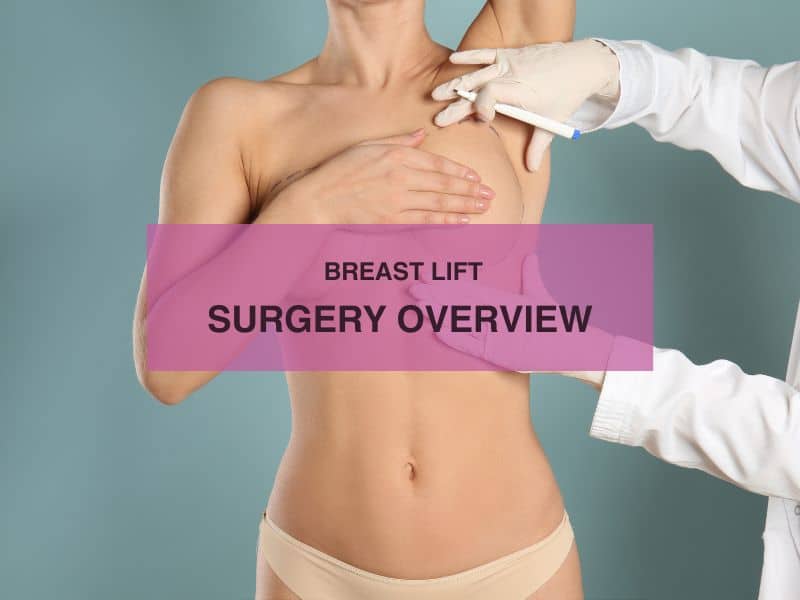
There are different types of breast lifts, depending on the amount of sagging and the desired results. The anchor breast lift is commonly used for patients with severe sagging, as it removes a significant amount of excess skin and reshapes the breast tissue. Other techniques involve smaller incisions and may be better suited for mild to moderate sagging.
During breast lift surgery, the plastic surgeon removes excess skin, reshapes the underlying breast tissue, and repositions the nipples. The procedure is performed under general anesthesia and typically takes a few hours. Breast lift costs can vary, depending on factors like the surgeon’s experience, anesthesia fees, hospital fees, and whether additional procedures like breast implants are involved.
FAQs: Breast Lift Surgery
Can a breast lift be considered medically necessary?
In rare cases, a breast lift may be considered medically necessary if a patient has severe physical discomfort due to sagging breast tissue. Insurance companies typically require documentation from a primary care physician and plastic surgeon proving that the procedure is necessary for health reasons, not just cosmetic improvement.
What is the difference between a breast lift and a breast reduction?
A breast lift is designed to reshape and lift the breasts without significantly reducing breast size. A breast reduction removes both excess skin and breast tissue to create smaller breasts. Breast reductions are more likely to be covered by insurance, while a lift is typically considered a cosmetic breast surgery.
How can I find the best breast lift surgeon for my procedure?
When looking for the best breast lift surgeon, it is important to choose a board certified plastic surgeon with experience in different types of breast lifts. Patients should review before and after photos, read patient reviews, and schedule consultations to discuss their goals and concerns.
How long does it take to recover after breast lift surgery?
You can expect your nipples to undergo initial healing within about 4 to 6 weeks after a breast lift. Most patients notice that their nipples and surrounding areas start to feel more normal in this timeframe, although some temporary numbness or altered sensation is common and may last longer as nerves recover. Sensation typically returns gradually between several weeks and a few months, but for some individuals, the healing process, especially full sensitivity, can extend up to a year.
Call Today to Book Your Appointment
Board certified plastic surgeon Dr. Dahlia Rice performs breast life surgeries for qualified patients in the Chicago area. Dr. Rice has extensive experience with this procedure and can help determine whether you may qualify for insurance coverage. Contact her office today to schedule a consultation.