
Lip enhancement has become one of the most sought-after cosmetic procedures in recent years. Patients looking for plump lips, better lip structure, or subtle refinement often turn to lip fillers. These injectable treatments are designed to add volume, smooth vertical lip lines, and restore a more youthful appearance.
The popularity of lip augmentation continues to rise because the results can be tailored. Some people want defined lips with a noticeable change, while others prefer subtle enhancement for a natural look. With many types of lip fillers available in Chicago, such as hyaluronic acid (HA) fillers, collagen fillers, and fat injections, patients can achieve their desired outcome safely when guided by an experienced provider.
In addition to fillers, other lip enhancement options like a lip flip or lip lift can complement the results, creating the perfect pout and enhancing facial contours.
Understanding Dermal Fillers
Dermal fillers are injectable treatments designed to restore lost volume, improve skin texture, and rejuvenate the appearance. For the lips, these injectable treatments provide:
- Smoother lips by smoothing vertical lip lines and fine lines
- More volume and a fuller appearance
- Enhanced cupid’s bow and mouth contours
- A natural looking result when placed precisely
Most modern fillers use hyaluronic acid (HA), a naturally occurring substance found in the body. HA fillers stimulate collagen production and help enhance facial contours. Popular and different types of lip fillers brands include Juvederm Ultra, Restylane Silk, Belotero Balance, and Restylane Lyft, which offer different formulations for customized outcomes.
When performed by a skilled injector, a lip filler procedure can achieve natural results that last several months with minimal downtime.
Different Types of Lip Fillers

1. Hyaluronic Acid Fillers
The most popular types of lip fillers are HA fillers such as Juvederm and Restylane. They are effective for:
- Adding lip volume and shape
- Creating defined lips and enhancing the cupid’s bow
- Producing a natural look with several formulations depending on the patient’s desired outcome
Because HA is a substance naturally found in the body, the risk of allergic reaction is very low. These fillers also allow adjustments: if the patient wants less volume, the filler can be dissolved.
2. Collagen Fillers
Before HA fillers, collagen fillers were the standard. Derived from bovine collagen, these fillers were effective for lip augmentation but carried a higher risk of allergic reaction. Today, collagen fillers are less common but still used for patients seeking smoother lips and improved lip structure.
3. Fat Injections (Fat Transfer)
Fat injections, also known as fat transfer, involve using a patient’s own fat from another area of the body. The fat is purified and reinjected into the lips. Benefits include:
- A natural looking result since it uses your own tissue
- Potential improvement in wrinkles and fine lines around the mouth
- Long-lasting effects if the fat graft takes successfully
However, results can be less predictable, and sometimes multiple sessions are needed.
4. Other Injectable Options
- Calcium hydroxylapatite fillers: Typically used for facial contours, occasionally for lip support.
- Poly-L-lactic acid fillers: Stimulate collagen production for gradual improvement.
- Lip implants: A more permanent form of cosmetic surgery that adds volume through silicone or synthetic implants.
These different types of lip fillers offer flexibility for patients depending on whether they want a temporary filler, long-lasting result, or even permanent lip implants.
Lip Filler Procedure: What to Expect
A lip filler procedure is straightforward and typically completed in under an hour.
Steps include:
- Application of a topical anesthetic or local anesthetic to minimize discomfort.
- The provider uses fine injections to deliver the filler into the upper lip, lower lip, or around the mouth.
- Results are visible immediately, though mild swelling and bruising are normal.
Most patients report minimal discomfort, thanks to modern fillers that already contain lidocaine (a mild anesthetic).
Choosing the Right Lip Filler
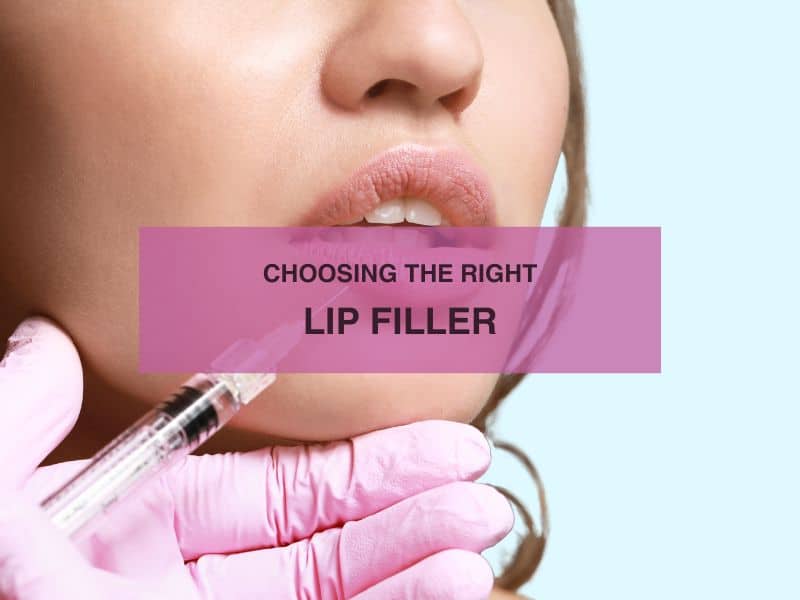
Your desired outcome plays the biggest role in choosing a filler. Some patients want a subtle enhancement, while others prefer a noticeably fuller appearance.
Your natural lip structure also matters. Thin lips may require a softer formulation, while naturally fuller lips can handle products designed to add more definition and volume.
The filler type you choose will influence the results. For a natural look, hyaluronic acid fillers like Juvederm Ultra or Restylane Silk are common choices. If you want more dramatic volume, options such as Restylane Lyft are often recommended.
Finally, think about longevity. Most HA fillers last between six and twelve months, while fat injections may provide longer-lasting results if the graft takes successfully.
An experienced provider can guide you in choosing between different fillers and explain the risks, including allergic reaction, uneven results, or overfilling.
What to Expect After Lip Filler Treatment
After lip filler injections, it’s normal to experience some swelling, redness, or tenderness in the lips. These effects usually improve within the first few days.
Mild bruising can also appear, but it tends to fade quickly and rarely interferes with daily activities. In some cases, temporary changes in lip shape may occur due to swelling.
The final results are typically visible after one to two weeks, once the swelling has subsided. Following proper aftercare, like avoiding strenuous exercise, excessive heat, or pressure on the lips, helps ensure the best outcome and longer-lasting results.
Enhancing the Area Around the Mouth
Lip fillers aren’t only for the lips, they can also:
- Improve the appearance of fine lines and wrinkles
- Define the cupid’s bow and mouth area
- Smooth vertical lip lines from the aging process
- Create a more youthful appearance by restoring balance to facial contours
When strategically placed, fillers can enhance facial contours without looking overdone, producing natural results.
Fat Transfer for Lip Enhancement
Fat transfer offers another approach to lip augmentation and relies on using the patient’s own tissue. The procedure begins by harvesting fat from areas such as the abdomen or thighs, which is then carefully purified before being injected into the lips.
This method can provide a fuller appearance and improve lip structure, creating results that look and feel natural. However, not all the transferred fat survives, which means additional sessions may sometimes be required.
Despite this, fat transfer remains an appealing choice for those who want a cosmetic procedure without synthetic fillers and prefer a more natural enhancement.
Maintaining Your Results
To keep your lip volume and natural look, follow these tips:
- Attend follow-up appointments as advised
- Protect lips with SPF and moisturizers
- Maintain a healthy lifestyle (hydration, diet, exercise)
- Schedule touch-up filler injections when needed
Consistency ensures the final results last and continue to enhance your appearance.
Potential Risks and Complications
Like any cosmetic procedure, lip filler injections carry some risks. Serious complications are rare, especially when the treatment is performed by a qualified injector.
An allergic reaction is possible, though this was more common with older bovine collagen fillers. Patients may also notice uneven lip volume or irregularities in lip structure if the filler is not placed evenly.
Overfilling is another concern, as it can create results that look unnatural. In very rare cases, infection or vascular complications may occur.
Choosing an experienced provider and carefully following aftercare instructions significantly lowers these risks and helps ensure safe, natural-looking results.
Types of Lip Fillers FAQ
What are the most common types of lip fillers?
The most common types of lip fillers are hyaluronic acid fillers such as Juvederm Ultra and Restylane Silk. They provide natural looking results, are safe, and allow adjustments if needed. Because hyaluronic acid is a substance naturally found in the body, the risk of an allergic reaction is minimal.
How long do lip filler injections last?
Results vary depending on the filler. HA fillers last 6–12 months, while fat injections can last longer. Touch-ups may be needed to maintain a fuller appearance. Factors like your individual metabolism and the specific product used also play a significant role in the longevity of the results.
Can lip fillers create a natural look?
Yes. Modern lip filler procedures are designed to provide subtle enhancement and a natural look. An experienced provider will adjust the filler placement to match your lip structure and desired outcome. The injector’s skill and artistic eye are crucial for achieving a balanced result that complements your unique facial anatomy.
Are lip fillers safe?
When administered by a trained injector, lip filler injections are considered safe. Risks include mild bruising or swelling, and rare complications like allergic reactions or uneven results. A very rare but serious risk is vascular occlusion, where filler is unintentionally injected into a blood vessel, requiring immediate medical attention.
What’s the difference between lip fillers and a lip lift?
Lip fillers add volume and definition through injectable treatments, while a lip lift is a cosmetic surgery that shortens the skin above the upper lip to enhance the lip structure permanently. Consequently, lip fillers have minimal downtime, whereas a lip lift involves a surgical recovery period with sutures.
Do lip fillers hurt?
Most patients feel only mild discomfort thanks to a topical anesthetic or a local anesthetic. Many fillers already contain lidocaine for added comfort during the lip filler procedure. Any post-procedure soreness or swelling is typically manageable with over-the-counter pain relievers and cold compresses.
Ready To Take The Next Step?
Dermal fillers are a safe and effective way to restore volume, smooth fine lines, and enhance facial contours. At DMR Aesthetics, we’ll walk you through the different types of dermal fillers and help you decide which treatment best aligns with your goals.
Board-certified plastic surgeon Dr. Dahlia Rice will answer your questions, address any concerns, and provide examples of past patient results so you know what to expect. Schedule your consultation today to explore the possibilities.